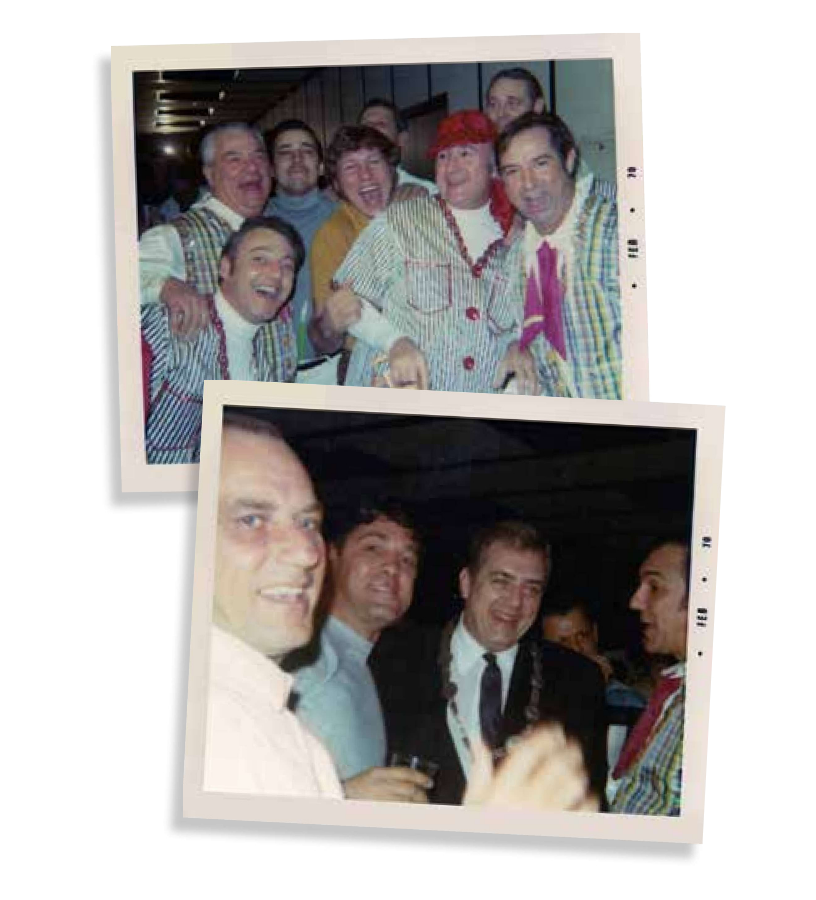

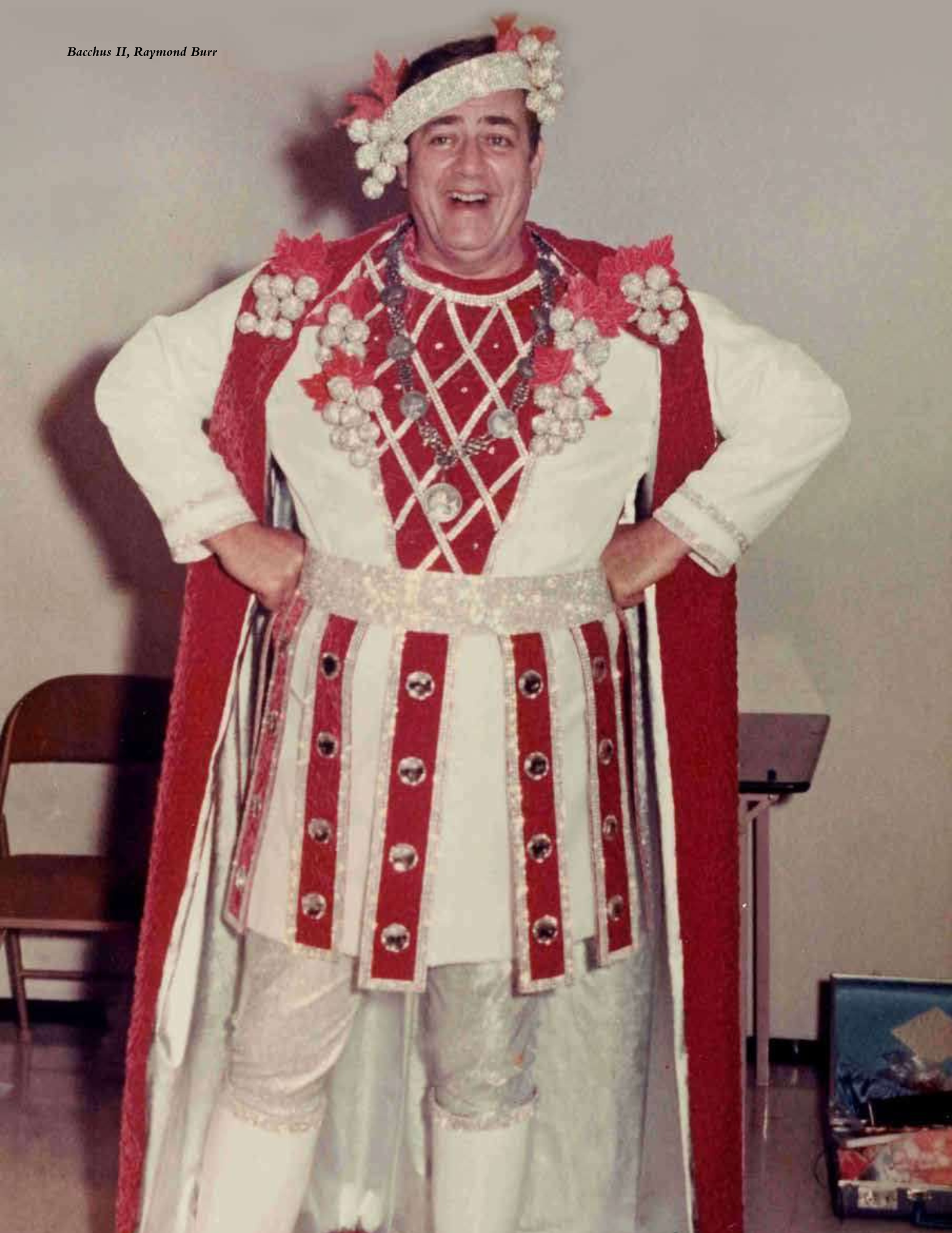
Bacchus II, Raymond Burr
Now, the problem with success is that the Krewe was expected to sustain it. The Baton Rouge Advocate reported the day of the February 8, 1970, parade:
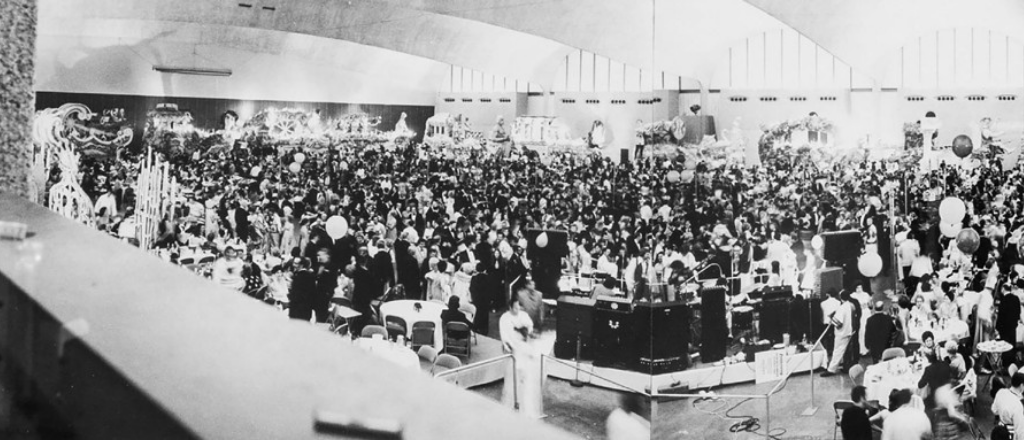
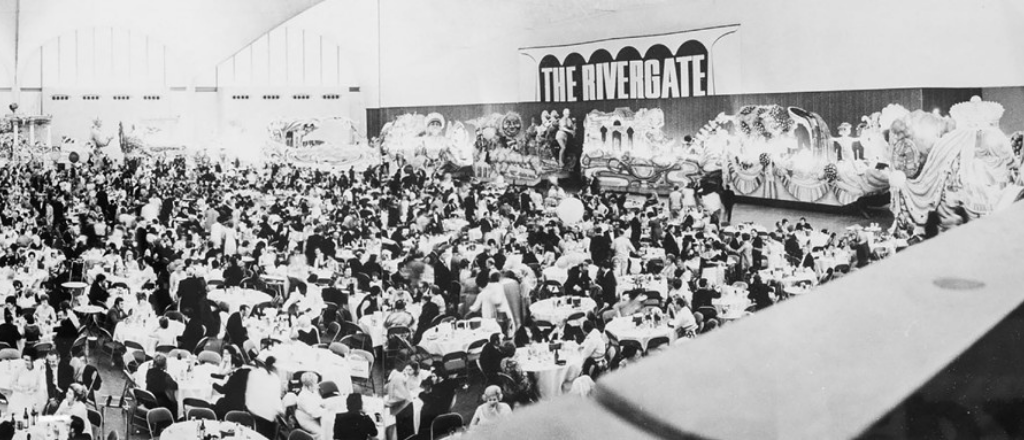
Bacchus is only two years old and already, it is making waves in the New Orleans tradition. Most traditional groups—Comus, Rex, Proteus, and Momus—hold stiff balls and parades, have an exclusive membership with names found in the social register, and Kings chosen from the ranks. ‘They didn’t like it when we brought in an outside man to be King and then we didn’t have a coronation ball’ (Marshall) Pearce said. ‘After our parade we wheel our floats into the Rivergate (an exhibition hall) and go gung-ho’.” Pearce was Bacchus’s first president.
The Times-Picayune wrote:
Bacchus, god of wine, revelry and feasting, visits the Mardi Gras city tonight. He will lead his jovial Krewe through the streets to their rendezvous at the Rivergate, where merry making and feasting will be the order of the evening. The Krewe of Bacchus, an organization composed of young businessmen, introduced a new concept in Mardi Gras floats last year when the Krewe appeared for the first time. Parade goers will remember the animated and specialty lighted floats of last year…The floats designed by Blaine Kern will feature such special effects as lights, colored smoke, flowing wine, sprightly bubbles, and merry maskers. More than 30 marching units from Louisiana, Alabama, and Mississippi, large papier mache walking figures and equestrian groups will complete the entourage.
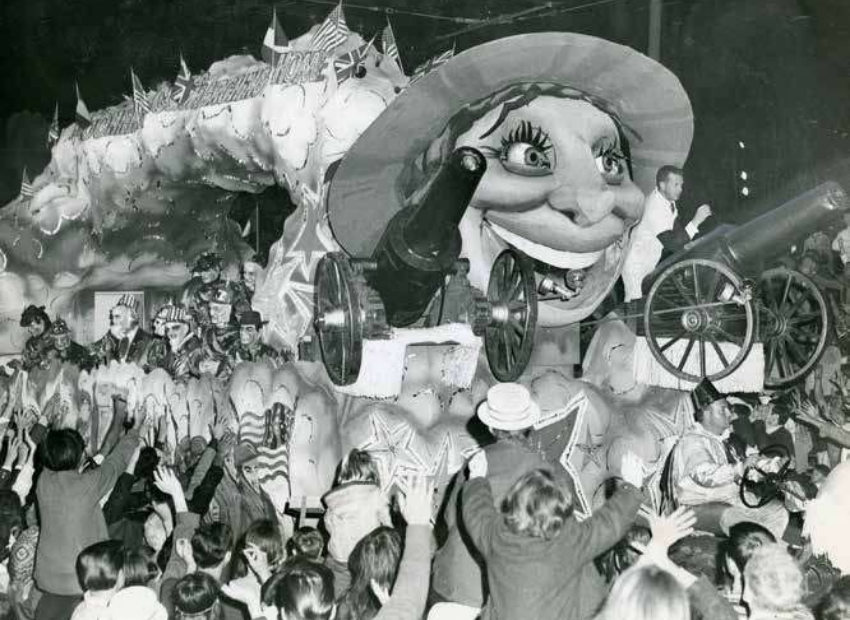
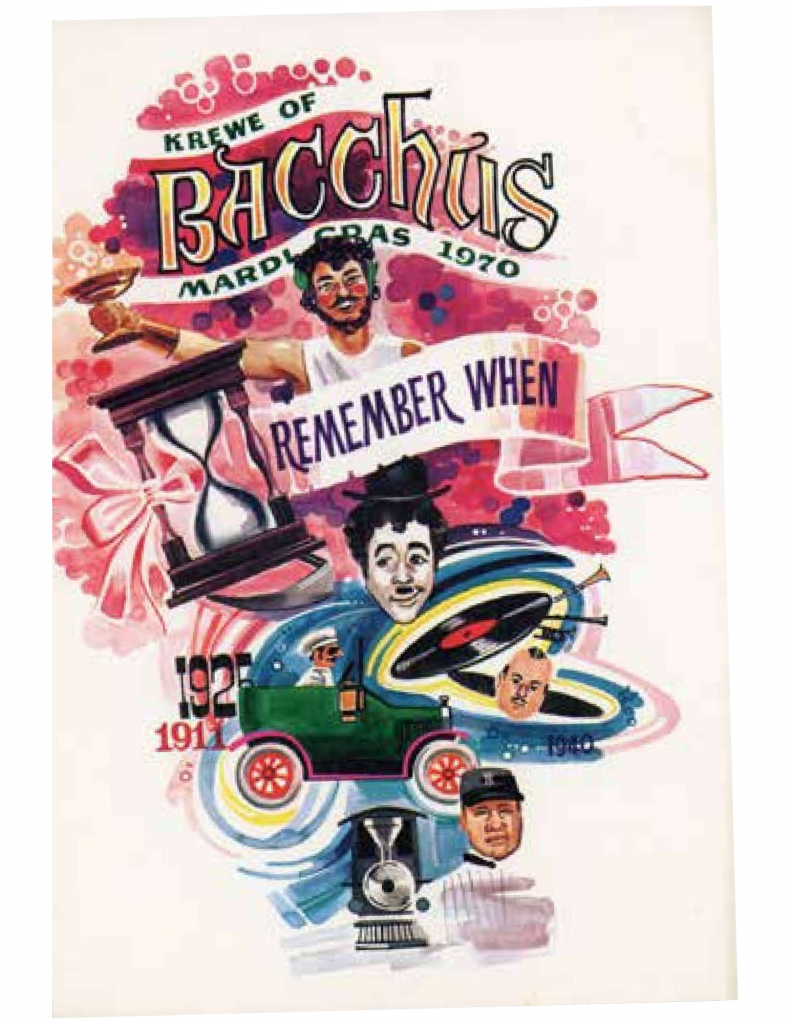
Again, the parade began at 7:00 P.M. on Jackson Avenue at the corner of Rousseau Street and ended at the Rivergate four hours later where 4,000 guests awaited. The weather was mild, in the mid 40s. The parade’s theme Remember When was carried out in 20 floats which the Baton Rouge Advocate called the following day a “spectacular display.” The floats were again designed by Joe Barth.
New Orleans trumpeter Al Hirt rode in the parade and claimed to have been hit by a brick thrown at him, requiring 12 stitches and stated so on The Tonight Show Starring Johnny Carson. Many however believe he slipped after too much fun and injured himself on the bead stanchion. His injury was reported in newspapers across the nation.
During the parade Co-Captain Pip Brennan ran out of throws and in a moment of excitement, threw his extremely heavy Captain’s necklace. In a 1990 interview, Brennan said, “I had no sooner thrown it than my brother said, ‘Have you lost your mind? You not only lost your Captain’s necklace but you could have killed someone’.”
Dick and Pip, the Co-Captains, were riding on “The Old Fashion Christmas” float in the sleigh dressed as Santa Clauses. At Gallier Hall one of the flambeaux carriers bent down to retrieve some change thrown to him and caught the fringe on the bottom of the float on fire. Fortunately, some man jumped the barricade and yanked that fringe off the float.
Again, the parade began at 7:00 P.M. on Jackson Avenue at the corner of Rousseau Street and ended at the Rivergate four hours later where 4,000 guests awaited. The weather was mild, in the mid 40s. The parade’s theme Remember When was carried out in 20 floats which the Baton Rouge Advocate called the following day a “spectacular display.” The floats were again designed by Joe Barth.
New Orleans trumpeter Al Hirt rode in the parade and claimed to have been hit by a brick thrown at him, requiring 12 stitches and stated so on The Tonight Show Starring Johnny Carson. Many however believe he slipped after too much fun and injured himself on the bead stanchion. His injury was reported in newspapers across the nation.
During the parade Co-Captain Pip Brennan ran out of throws and in a moment of excitement, threw his extremely heavy Captain’s necklace. In a 1990 interview, Brennan said, “I had no sooner thrown it than my brother said, ‘Have you lost your mind? You not only lost your Captain’s necklace but you could have killed someone’.”
Dick and Pip, the Co-Captains, were riding on “The Old Fashion Christmas” float in the sleigh dressed as Santa Clauses. At Gallier Hall one of the flambeaux carriers bent down to retrieve some change thrown to him and caught the fringe on the bottom of the float on fire. Fortunately, some man jumped the barricade and yanked that fringe off the float.
Read All About It!
Featuring the World's Greatest Jazz Band
Swing music singer and bandleader Bob Crosby and the World’s Greatest Jazz Band, performed at the Krewe’s second Rendezvous while delicious food and wine were served. Crosby’s band incorporated swing music with jazz creating a distinctive Big Band sound. His recording of “South Rampart Street Parade” was a local favorite.
Bacchus II was portrayed by Canadian born actor Raymond Burr (1917-1993). Burr’s career included Broadway, radio, films, and television, but he was best known for his television portrayal of Perry Mason (1957-1966) and Ironside (1967-1975). While playing chief of detectives Robert T. Ironside, Burr was asked to personify Bacchus. Burr responded, “I wouldn’t have missed coming down here to New Orleans for anything.” When a local reporter queried, “Oh, Mr. Burr, you’ve been king of TV for so long, what’s it like to be a real King now?” Burr in his baritone voice slowly replied, “Well I’ve never really been king of anything before, and I know one always has to be prepared to be dethroned.” The local newspaper, the Times-Picayune observed, “In several ways it’s very fitting Burr should rule as Bacchus, the god of wine, since as a gourmet, the grape is not unfamiliar to him.” Burr would later start a wine business.
Swing music singer and bandleader Bob Crosby and the World’s Greatest Jazz Band, performed at the Krewe’s second Rendezvous while delicious food and wine were served. Crosby’s band incorporated swing music with jazz creating a distinctive Big Band sound. His recording of “South Rampart Street Parade” was a local favorite.
Bacchus II was portrayed by Canadian born actor Raymond Burr (1917-1993). Burr’s career included Broadway, radio, films, and television, but he was best known for his television portrayal of Perry Mason (1957-1966) and Ironside (1967-1975). While playing chief of detectives Robert T. Ironside, Burr was asked to personify Bacchus. Burr responded, “I wouldn’t have missed coming down here to New Orleans for anything.” When a local reporter queried, “Oh, Mr. Burr, you’ve been king of TV for so long, what’s it like to be a real King now?” Burr in his baritone voice slowly replied, “Well I’ve never really been king of anything before, and I know one always has to be prepared to be dethroned.” The local newspaper, the Times-Picayune observed, “In several ways it’s very fitting Burr should rule as Bacchus, the god of wine, since as a gourmet, the grape is not unfamiliar to him.” Burr would later start a wine business.
Mission accomplished. Bacchus would become the standard by which future krewes would be gauged.
Bacchus, The Golden Anniversary
The King of TV
Burr began his acting career in 1934 in Canada and as an American studio actor in 1946 in the comedy Without Reservations with John Wayne and Claudette Colbert. Many of Burr’s early roles were villains. Between 1946 and 1957, Burr appeared in more than 60 movies, receiving critical acclaim for the 1951 drama A Place in the Sun co-starring Elizabeth Taylor, Montgomery Clift, and Shelley Winters, and in the 1954 Alfred Hitchcock thriller Rear Window co-starring James Stewart and Grace Kelly. Burr made his television debut in 1951 and played numerous roles in programs such as the police drama Dragnet. In 1957 Burr won six Emmys and two Golden Globes. From 1960 until his death in 1993, he was partnered with Robert Benevides, to whom he left his entire estate.
Burr was a friend of the family, and all it took was one call from Ella (Brennan Martin). Burr replied, ‘You want me, you got me’.” Ella recalled, “We all knew Raymond over a period, I would say, of 20 years. He liked to come to New Orleans… He was very much a friend, a dear, dear, friend of the whole clan. He loved us all. He couldn’t be more friendly and wonderful.” Burr’s costume was designed by Larry Youngblood. His royal crown was red, encrusted with rhinestones. At three hundred pounds, Burr was the largest Bacchus ever. The Times-Picayune observed, “…but for the absence of whiskers, he might have been Santa Claus.” Youngblood worked from measurements sent to him, but Burr had gained a lot of weight. When Youngblood was asked by Burr what he was going to do, Youngblood responded, “Don’t worry, your majesty, by the time the parade rolls, you’ll be fine.” Burr laughed and said, “I like that. In my early roles before I got respectable as a lawyer, I was always the villain in those costumed epics, who was out to do his majesty in. I was mean. I hope no one wants to do me in.”
Hail Bacchus!
The Krewe’s third Rendezvous in the Rivergate showcased the 1971 parade, Bacchus Salutes Mardi Gras.
The God of Wine
Burr failed to pace his alcohol consumption as he celebrated being the god of wine, and when it came time to get off his float at the Rivergate he slipped off the ladder and landed atop float builder Blaine Kern who was assisting him. Luckily there were no injuries except perhaps Burr’s dignity.
Until 1975 the Krewe’s business was run out of Blaine Kern’s office. Then it began being operated at Brennan’s restaurant accounting office on Royal Street. In 1970, three directors were added to Bacchus’s original 13 board members. They were Roland Hymel Jr., William J. Connick, and Anthony Fazola.